Key Takeaways:
- IPL may be appropriate for some darker skin tones, but only after a personalized assessment confirms that your skin type, pigmentation history, treatment area, and recent sun exposure make it a safe choice.
- For melanin-rich skin, Fitzpatrick type is only the starting point; active post-acne marks, melasma, tanning, and body area can all raise the risk of burns or unwanted pigmentation after treatment.
- The safest provider is not the one who says yes to every device, but the one who uses conservative settings, test spots, and honest guidance to recommend a better-matched option when IPL is not your best fit.
IPL works by sending broad-spectrum light into the skin to target pigment, which sounds simple until you consider that melanin-rich skin has more of that pigment throughout. As UT Southwestern notes, IPL is generally recommended for Fitzpatrick I–III (lighter skin tones), and darker skin types face a real risk of hyperpigmentation when the device isn’t calibrated carefully. The right question isn’t whether IPL works. It’s whether IPL is the right tool for your skin, and whether your provider will tell you the truth when it isn’t.
The honest answer is that IPL can be appropriate for some people with darker skin, but only after a thorough, personalized assessment. The right call depends on your Fitzpatrick skin type, the treatment area, your history with pigmentation, and whether a provider is willing to say “another option fits you better” when that’s the truth. At Restoration MedSpa, that kind of candid, client-first guidance is exactly what a Lasers & Light consultation is built around.
Why Darker Skin Needs More Caution With IPL
The science of melanin and IPL safety comes down to one unavoidable conflict: IPL is built to target pigment, and melanin-rich skin has more pigment everywhere. That conflict doesn’t close the door on treatment. It means the questions below matter, and so do the answers your provider gives you.
How does melanin affect how IPL behaves in the skin?
IPL emits a broad range of light wavelengths that are absorbed by pigment, and melanin is pigment. In melanin-rich skin, the device can’t always distinguish between the pigment you want treated and the pigment that’s naturally there. That excess absorption generates heat, and too much heat in the wrong place causes damage.
Why can IPL end up affecting healthy skin alongside the targeted concern?
IPL doesn’t fire a single precise wavelength. The FDA classifies IPL as a thermal device, meaning it works through heat. When skin has higher baseline melanin levels, healthy surrounding tissue can absorb that heat just as readily as the spot being treated, raising the risk of burns or uneven pigmentation.
Which specific concerns put darker skin at greater risk of complications?
A published case review documents second-degree burns in Fitzpatrick IV skin from non-individualized IPL settings. A 2026 peer-reviewed review links Fitzpatrick IV–VI skin to higher rates of post-inflammatory hyperpigmentation, hypopigmentation, and scarring. Active post-acne marks, melasma, and recently tanned skin all increase that vulnerability considerably.
Does it matter where on the body IPL is being done?
Yes. Skin on the face, neck, and chest often behaves differently from skin on the arms or legs, partly because sun exposure and tanning affect those areas unevenly. Body areas that tan more deeply may carry higher melanin concentration in the treatment zone, which shifts the risk profile even for clients with moderate baseline skin tone. Our Aerolase page covers how device selection shifts with treatment area.
What should a provider actually do before recommending IPL on melanin-rich skin?
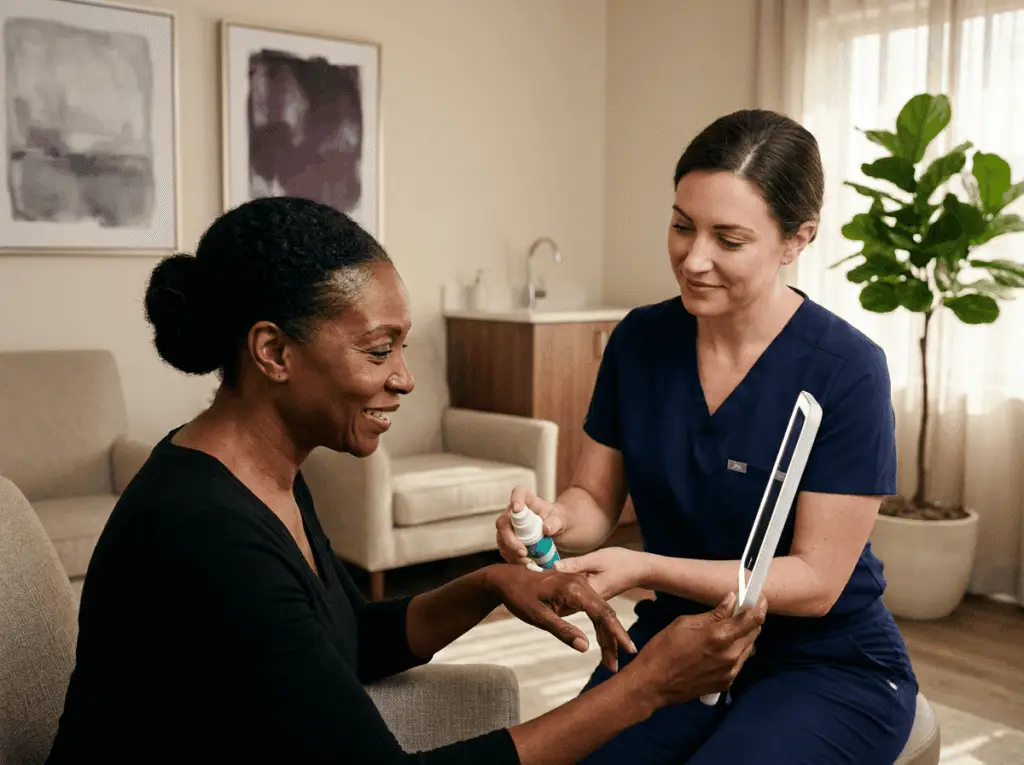
A provider taking your skin seriously will review your pigmentation history, ask about recent sun exposure, and consider a test spot before any full session. They’ll also discuss conservative settings and cooling protocols. Equally telling: a trustworthy provider will point you toward BBL laser or another better-matched option without hesitation.
Is IPL Safe for Fitzpatrick IV to V Skin Tones?
Skin tone classification is a starting point, not a verdict. For anyone with deeper complexions, understanding what actually goes into an IPL safety assessment, and what can shift that assessment, makes the difference between a confident decision and an avoidable risk.
Is IPL safe for Fitzpatrick IV–V skin tones?
For Fitzpatrick IV–V, IPL carries a meaningfully higher risk than it does for lighter skin types. The device’s broad-spectrum light can confuse the melanin in healthy surrounding skin with the pigment it’s supposed to treat. In those cases, a device like Aerolase is often the safer, more precise choice.
What does a Fitzpatrick skin type assessment actually measure?
It measures how your skin responds to sun exposure: how quickly it burns and how deeply it tans. Providers use this as a baseline to estimate melanin concentration. The scale runs from Type I (very fair, always burns) to Type VI (deeply pigmented, never burns).
Why isn’t the Fitzpatrick type enough on its own to predict IPL safety?
It captures baseline pigmentation but misses the full picture. Two people at Fitzpatrick IV can have very different melanin distribution, pigmentation histories, or active skin concerns. A thorough assessment also factors in current skin condition, treatment area, and your goals, all of which shape the recommendation.
Can recent sun exposure, tanning, or post-acne marks change whether IPL is advisable?
Absolutely. Even a mild tan temporarily increases surface melanin, which raises the chance that IPL heat gets absorbed in the wrong place. Post-inflammatory marks from acne behave similarly. Either factor can shift a “maybe” into a “let’s wait” or a firm recommendation toward an alternative approach.
Why might two clients with similar skin tones get different recommendations?
Because skin tone is one variable, not the whole story. One client may have well-managed pigmentation and no recent sun exposure; another may have active melasma or a history of post-inflammatory hyperpigmentation. As Restoration MedSpa’s laser and skin rejuvenation approach reflects, individualized assessment, not a single label, determines the right path forward.
How Providers Lower Risk When IPL Is Considered
When IPL remains a possibility after a careful skin assessment, the quality of the treatment plan is what separates a safe outcome from a risky one. For melanin-rich skin, a provider who knows what to adjust and when to hold back entirely determines the outcome.
What IPL settings for darker skin reduce epidermal heat?
Adjusting IPL settings for darker skin starts with lowering fluence (energy level) and using longer pulse durations. Cutoff filters can also narrow the wavelength range so less light energy reaches surface melanin. These adjustments, supported by published IPL research, are a core part of responsible treatment planning for pigment-rich skin.
Why does conservative treatment planning matter more than fast results?
Spreading treatment across multiple sessions at lower energy gives skin time to respond safely between appointments, as Dove Press IPL research documents. Chasing full results in one session raises the risk of overheating pigment-rich tissue. For deeper skin tones, slower and steadier is the smarter approach, not a compromise.
What is a test spot, and why should it happen before a full session?
A test spot applies IPL to a small skin patch before treating the full area. The provider monitors that area over several days to check for adverse reactions. If the skin responds well, the full session can proceed with greater confidence. Skipping this step on melanin-rich skin is not acceptable clinical practice.
Who is most prone to hyperpigmentation after IPL?
Post-inflammatory hyperpigmentation (PIH) happens when skin trauma prompts an excess melanin response. Deeper Fitzpatrick types carry a higher baseline risk, per the British Journal of Dermatology. Recent sun exposure, active tanning, or existing post-acne marks going into a session can push that risk higher still.
Which aftercare steps help prevent PIH after IPL?
Consistent broad-spectrum SPF is the most important step after treatment. UV exposure on treated skin can trigger the exact pigment response you were trying to correct. Avoiding heat sources like saunas for a few days also lowers the risk of inflammation. A detailed aftercare plan should be part of every consultation before you leave the office.
When Another Option May Be Better Than IPL
When a provider says IPL is not the right fit, that honesty reflects solid clinical judgment. A 2026 peer-reviewed review confirms that for Fitzpatrick IV–VI skin, options like radiofrequency microneedling and long-pulsed Nd:YAG lasers treat the same concerns with meaningfully lower pigmentation risk.
At Restoration MedSpa, a Lasers & Light consultation is built around your skin, not around a device. The AAD’s skin of color guidance calls for individualized approaches for melanin-rich skin, and that sometimes means recommending Aerolase or microneedling over IPL. A provider who says that clearly, early, and without hesitation is the most important part of a safe outcome.
Request a personalized skin assessment and find out exactly which path fits your skin tone, your goals, and your history.