
Key Takeaways:
- Laser hair removal can reduce recurring ingrown hairs in men by lowering how much hair grows back and how coarse that regrowth is, which helps break the shave, bump, repeat cycle at its source.
- The best results come from a plan tailored to your skin tone, hair texture, treatment area, and inflammation level, because beard-line bumps, body hair, and sensitive skin do not respond well to a one-size-fits-all approach.
- Men usually see improvement over a series of treatments, not one session, so realistic expectations and provider guidance are key if your goal is fewer razor bumps, less irritation, and less shaving dependence.
For men with coarse or curly hair, pseudofolliculitis barbae is a follicle geometry problem. Close shaving leaves a sharp-tipped hair that, in curved follicles, is mechanically predisposed to re-enter the skin rather than grow outward. Adjust your technique, and you manage the cycle. Change what the follicle produces, and you can break it.
That is what laser hair removal does: it reduces how much hair regrows and how coarse it becomes, which means fewer hairs with the curl-back pattern that keeps triggering inflammation. The best results come from matching the right device, settings, and schedule to your skin tone, hair texture, and the specific areas where bumps keep returning.
At Restoration MedSpa, that personalized plan is where every conversation starts. Request a consultation to find out what is right for you.
Why Do Ingrown Hairs and Razor Bumps Happen in Men?
The mechanics behind razor bumps explain why laser hair removal addresses the problem at its source rather than managing symptoms.
Why do men get razor bumps more often than occasional ingrown hairs?
Razor bumps form when a cut hair curls back and re-enters the skin instead of growing outward. Men who shave frequently, especially over coarse or tightly coiled hair, repeat this cycle with every session. Laser hair removal reduces the amount of hair that regrows, which means fewer hairs to curl back in the first place.
What is pseudofolliculitis barbae, and how is it different from a regular ingrown hair?
Pseudofolliculitis barbae, often called PFB, is a chronic inflammatory condition caused by repeated ingrown hairs, most commonly along the beard line and neck. Unlike a single occasional bump, PFB involves persistent inflammation, recurring bumps, and skin changes that build over time. It is far more disruptive than an isolated ingrown hair and often requires a longer-term approach.
Why is the beard line and neck area so prone to ingrown hairs?
The neck and cheek line combine two aggravating factors: close shaving pressure and naturally curved hair follicles. Hair in this area often grows at an angle, so trimming or shaping the edge leaves a sharp tip that curves back easily. The American Academy of Dermatology notes that laser hair removal offers long-term reduction, whereas shaving keeps triggering irritation.
Which body areas tend to see the best results when ingrown hairs keep returning?
Areas with dense, coarse, or curly hair growth tend to respond well because those are the follicles most likely to produce the curl-back pattern. The beard line, neck, chest, back, and groin are common problem zones for men. The Aerolase NeoElite laser, available at Restoration MedSpa, is designed to work comfortably across sensitive areas like the neck, where repeated inflammation makes skin more reactive.
Can laser treatment help when bumps have already left dark marks or ongoing irritation?
Yes, and this is where addressing the root cause matters most. When ingrown hairs trigger repeated inflammation, post-inflammatory hyperpigmentation can develop alongside the bumps. Reducing hair regrowth breaks the cycle of irritation, giving existing skin discoloration a better chance to fade without new inflammation constantly resetting the process.
Who Is a Good Candidate for Laser Hair Removal for Ingrown Hairs?
Not every man dealing with ingrown hairs has the same skin, hair type, or shaving routine, and those differences genuinely shape what a laser can do. These answers address the variables that matter most, giving you a clearer picture of where you stand before scheduling a consultation.
Does skin tone or hair texture change how the treatment is planned?
Yes, and it matters more than most people realize. Laser works by targeting pigment in the hair follicle, so the contrast between hair color and skin tone affects how settings are calibrated. Fitzpatrick skin type research confirms that darker skin tones can be treated safely, but wavelength selection and fluence need careful adjustment by an experienced provider. A one-size approach does not apply here.
Does it work for ingrown hairs on the beard, chest, back, and groin?
According to the American Academy of Dermatology, laser hair removal is effective across most body areas where ingrown hairs and razor bumps are a recurring problem. The beard line and neck tend to need the most thoughtful approach because facial hair is often coarser and hormonally influenced. At Restoration MedSpa, the Aerolase NeoElite and Motus AZ+ are used across multiple treatment zones, including the face and back.
What if the goal is fewer ingrown hairs, not complete hair removal?
Reduction is a completely valid goal, and a good provider will plan around it. Fewer active follicles mean fewer hairs with the curl-back pattern that triggers bumps. Partial reduction can still meaningfully lower shaving irritation without changing your overall look.
Can men with sensitive or chronically inflamed skin still be candidates?
Sensitivity alone does not rule someone out. The Mayo Clinic notes that active inflammation or irritation in the treatment area should be assessed before starting sessions. Restoration MedSpa’s Aerolase technology uses 650-microsecond pulses, specifically designed to reduce heat buildup, making it a gentler option for reactive skin around the beard line and neck.
When does a provider need to assess the skin before agreeing on a plan?
If bumps are currently inflamed, infected, or leaving behind dark marks, a closer look before treatment is the right call. A provider needs to understand whether the skin has healed enough to respond well to laser energy. Skipping that step increases the risk of irritation rather than relief.
How Many Sessions Does It Take, and What Results Should Men Expect?
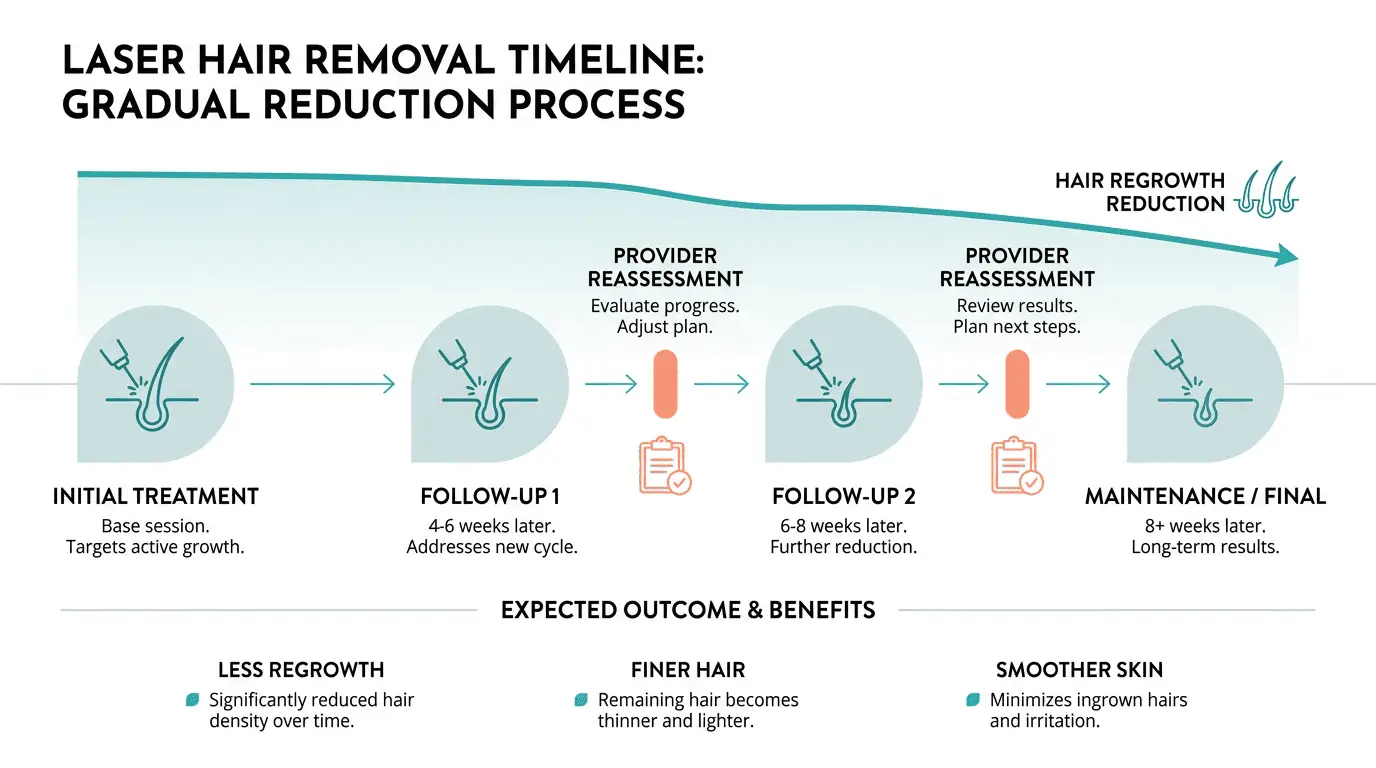
The timeline for laser hair removal is gradual by design, not by limitation. Laser energy affects only follicles in their active growth phase, and not all follicles cycle at the same time, which is why each session targets a new wave and results build over the series. Understanding biology up front makes the plan easier to commit to and the progress easier to track.
How many sessions will I need before I notice fewer ingrown hairs?
Most men need 4 to 8 sessions to see meaningful hair reduction. Ingrown hairs often start to calm down partway through that range, as less regrowth means fewer hairs curling back into the skin. Our Aerolase treatments are typically spaced 2 to 4 weeks apart.
Why doesn’t the first session clear everything up?
Laser energy only affects follicles in their active growth phase. Since not all hairs are in that phase at the same time, each session targets a new wave of follicles. The American Academy of Dermatology notes that most people see a 10–25% reduction after the first treatment, with regrowth that is softer and thinner.
Will laser hair removal stop ingrown hairs for good?
It significantly lowers the odds, but it’s not a permanent guarantee for everyone. Mayo Clinic notes that some hair may eventually return, often finer and lighter. The goal is fewer bumps, less irritation, and much less dependence on shaving, not necessarily zero hair forever.
What should I do between sessions to avoid making things worse?
Shave the area before your appointment, and avoid waxing, tweezing, or plucking between sessions, as these methods pull the hair out and interfere with the laser’s targeting. Staying out of the sun and avoiding anything that causes friction or heat on treated skin helps keep irritation to a minimum while your follicles respond.
How does a provider adjust the plan if my beard or hormonal hair growth is stubborn?
Coarse facial hair and hormone-driven regrowth often require a more customized approach. A provider may extend the spacing between sessions, adjust the energy settings, or schedule a reassessment mid-series. That flexibility is exactly why a personalized consultation matters more than following a fixed, one-size schedule.
Take the Next Step With a Personalized Laser Hair Removal Plan
A JAMA Dermatology study found that men saw more than 75% reduction in pseudofolliculitis lesions after just three laser sessions. That is not a technology headline; it reflects what happens when device selection, energy settings, and session timing are calibrated to a specific person’s skin tone, hair texture, and regrowth pattern rather than a generic protocol. That level of personalization is what makes the difference, and it starts with a thorough assessment, not a standard booking.
Guessing based on general advice online rarely accounts for the nuances that shape your outcome: hormonal regrowth patterns, skin sensitivity, or whether your goal is fewer ingrown hairs rather than complete removal. At Restoration MedSpa, the approach starts with education and honest guidance, so you leave your consultation with a clear picture of what hair regrowth reduction can realistically look like for you, and a plan built around your skin, not someone else’s.
Ready to stop managing razor bumps and start addressing what causes them? Request an appointment to explore your laser hair removal options with a provider who will assess your hair growth pattern, skin response, and treatment goals before recommending a single session.