Key Takeaways:
- Rosacea, diffuse facial redness, and broken capillaries can look similar, but they do not respond the same way, which is why a personalized provider assessment is the first step to a treatment plan that actually fits your skin.
- Visible broken capillaries usually develop over time from triggers like sun exposure, flushing, aging, and friction, and once they dilate at the surface, they rarely fade on their own without targeted treatment.
- Laser and light-based care can selectively treat visible vessels while respecting surrounding skin, but clearer, more even-looking results usually come from the right device, realistic expectations, and a series-based plan instead of a one-time fix.
Most people trying to address persistent facial redness are working with an incomplete picture. They see redness, they want it gone, and they reach for whatever treatment they’ve heard is effective. However, results vary significantly based on the underlying cause, because rosacea, diffuse redness, and broken capillaries are three distinct concerns that can look nearly identical on the surface and respond to entirely different treatments. Identifying which one is actually driving your skin is where effective care begins.
For Greensboro readers dealing with broken capillaries or persistent facial redness, the most helpful starting point is a personalized assessment that identifies the likely cause before selecting any treatment. Restoration MedSpa’s Lasers & Light treatments are provider-guided and built around your skin’s specific needs, so you can move forward with clarity rather than guesswork.
Rosacea, Redness, and Broken Capillaries Are Not the Same
Not all facial redness looks alike, and, more importantly, it doesn’t all behave the same way. Understanding the difference between rosacea, general facial redness, and broken capillaries is the first step toward finding a treatment approach that actually works for your skin.
Diffuse Redness and Rosacea Look Different From Broken Capillaries
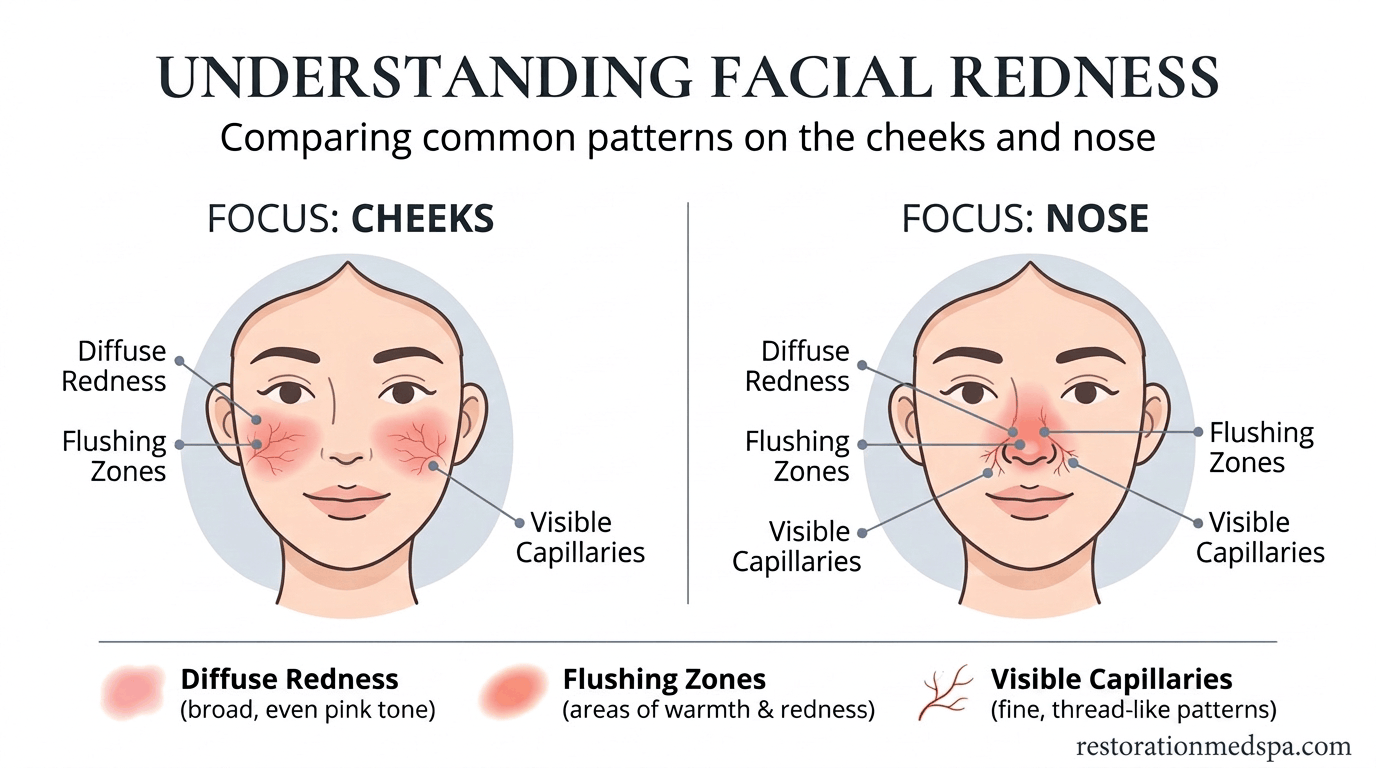
Rosacea tends to present with widespread flushing, persistent skin sensitivity, and a general warmth across the cheeks, nose, or forehead. Broken capillaries, by contrast, appear as small, distinct red or purple lines clustered near the nose and cheeks. One is a pattern of inflammation and reactivity; the other is a visible, damaged blood vessel sitting close to the skin’s surface.
These Concerns Can Overlap, But They Don’t Respond the Same Way
Because rosacea and broken capillaries can appear in the same areas, it’s easy to assume one treatment covers both. It doesn’t. According to OHSU Dermatology, visible vessels and diffuse redness often require different approaches, and treating all redness as a single issue can lead to incomplete results. A plan built for one may simply miss the other.
Why a Provider Assessment Changes Everything
That distinction isn’t always obvious at a glance, and getting it wrong means a treatment plan may only partially address what’s actually there. Pattern, trigger history, skin sensitivity, and how clearly vessels are visible all shape which approach makes sense. Restoration MedSpa’s laser and skin rejuvenation approach in Greensboro begins with a provider-led evaluation designed to answer that question first, so the treatment that follows is matched to your skin rather than applied broadly.
What Causes Broken Capillaries and How Are They Treated?
Broken capillaries rarely appear overnight. For most people, they build up gradually over years, which is why pinpointing a single cause can feel impossible. Research from NIH describes these visible vessels as a result of structural changes to small blood vessels near the skin’s surface, changes that accumulate from a mix of triggers rather than one defining moment.
Here is what tends to drive that process forward over time:
- Sun exposure adds up year after year. UV damage weakens the thin walls of small surface vessels, making them more likely to dilate permanently and stay visible.
- Heat, flushing, and inflammation play a steady role. Repeated exposure to hot environments, spicy foods, alcohol, or chronic flushing gradually stretches capillary walls beyond their ability to bounce back.
- Aging and skin thinning make existing vessels more visible. As skin loses collagen and thickness over time, capillaries that were always there become easier to see.
- Everyday friction and pressure contribute more than most people expect. Rubbing the skin aggressively, poor-fitting glasses, or even consistent facial habits can stress delicate vessels around the nose and cheeks.
- Waiting rarely helps. Once a capillary is visibly dilated at the surface, it does not reliably close or fade on its own. The AAD notes that laser and light-based treatments can reduce visible vessels by 50 to 75 percent, a result that simply waiting cannot replicate.
Treating broken capillaries well means addressing both the visible vessel and the habits or triggers that may keep creating new ones. Laser vein removal works by delivering targeted energy that heats and seals the damaged vessel without significantly affecting the surrounding skin. Paired with gentle skincare, daily sun protection, and some awareness of personal triggers, that approach gives the skin a real chance to look clearer and stay that way longer.
How Laser and Light Treatments Reduce Redness
Understanding how laser treatments help reduce facial redness and visible capillaries starts with one key difference from topical care: light energy can be calibrated to target a specific damaged vessel, at a specific depth, while leaving the surrounding skin largely undisturbed.
Targeting the Vessel, Not the Whole Face
Laser and light devices work by delivering controlled energy that heats the visible vessel, causing it to collapse and eventually get reabsorbed by the body. The surrounding skin is largely left alone. Treated vessels are permanently addressed by this process, though new capillaries can still form over time.
Why the Right Device Matters More Than a Brand Name
Not every laser works the same way on every skin. Vessel size, depth, skin tone, and overall sensitivity all influence which device and settings will be safest and most effective. Asking for a specific device by name matters less than working with a provider who understands laser vs. sclerotherapy differences and which approach fits your skin. That match between treatment and skin is what separates a frustrating result from a satisfying one.
Realistic Expectations Lead to Better Results
Most people see the best results from a series-based treatment plan rather than a single session. Gradual improvement reflects a pace the skin can actually respond to, and that’s worth expecting from the start.
Redness and Broken Capillaries Treatment in Greensboro: Frequently Asked Questions (FAQs)
Knowing what to expect at each stage of care makes the whole process feel a lot less uncertain. Whether you are considering your first consultation or wondering what recovery looks like, the answers below can help you feel more prepared and confident as you go in.
What happens during a consultation for redness and broken-capillary treatment?
A consultation is a conversation, not a commitment. Your provider will look closely at where the redness appears, ask about your triggers, skin history, and goals, and explain which treatment options make sense for your specific pattern. You leave with a clear picture of what a plan could look like, not a generic recommendation.
What does treatment feel like during a laser or light session for facial redness?
Most people describe the sensation as a quick snap or warmth against the skin. Discomfort is generally mild and brief. Sessions vary in length depending on the area being treated, but many people return to their regular routine the same day, with only minor temporary redness to expect right after.
What should I expect right after treatment?
Some short-term redness, warmth, or mild swelling is normal and usually settles within a day or two. The Mayo Clinic notes that sun protection is especially important during recovery, as treated skin is more sensitive to UV exposure. Gentle skincare and avoiding known triggers help protect your results during this window.
Will I need more than one session?
For most people, yes. Redness that has developed gradually over years, or that overlaps with rosacea-prone skin, often responds best to a series of treatments rather than a single session. The American Academy of Dermatology emphasizes that treatment plans for redness concerns are individualized and may combine approaches over time to maintain results.
Is there anything I need to do to prepare before my appointment?
General preparation includes avoiding direct sun exposure in the days before treatment, pausing certain active skincare ingredients, and arriving with clean skin. Your provider will confirm the specifics at your consultation; coming in with a list of your known triggers or any past skin reactions gives them a fuller picture to work from.
Choose a Treatment Plan That Fits Your Skin
The reason so many people move through one treatment after another for facial redness without lasting improvement isn’t that laser and light-based care doesn’t work. It’s that broken capillaries, rosacea, and diffuse redness respond to different wavelengths and approaches, and treating them as a single concern means the plan may only partially address what’s actually driving your skin’s issues. As NHS clinical guidance confirms, the choice of device matters because different vessels respond to different wavelengths, making the assessment step the one that determines whether the results feel complete.
Effective treatment for redness and broken capillaries in Greensboro begins exactly there. Restoration MedSpa’s Lasers & Light treatments are guided by a provider who takes the time to identify what’s driving your redness before recommending a path forward, so you leave with a plan tailored to your skin rather than a broad approach. If clearer, more even-looking skin is your goal, request an appointment and start with a conversation designed around what your skin is actually doing.